
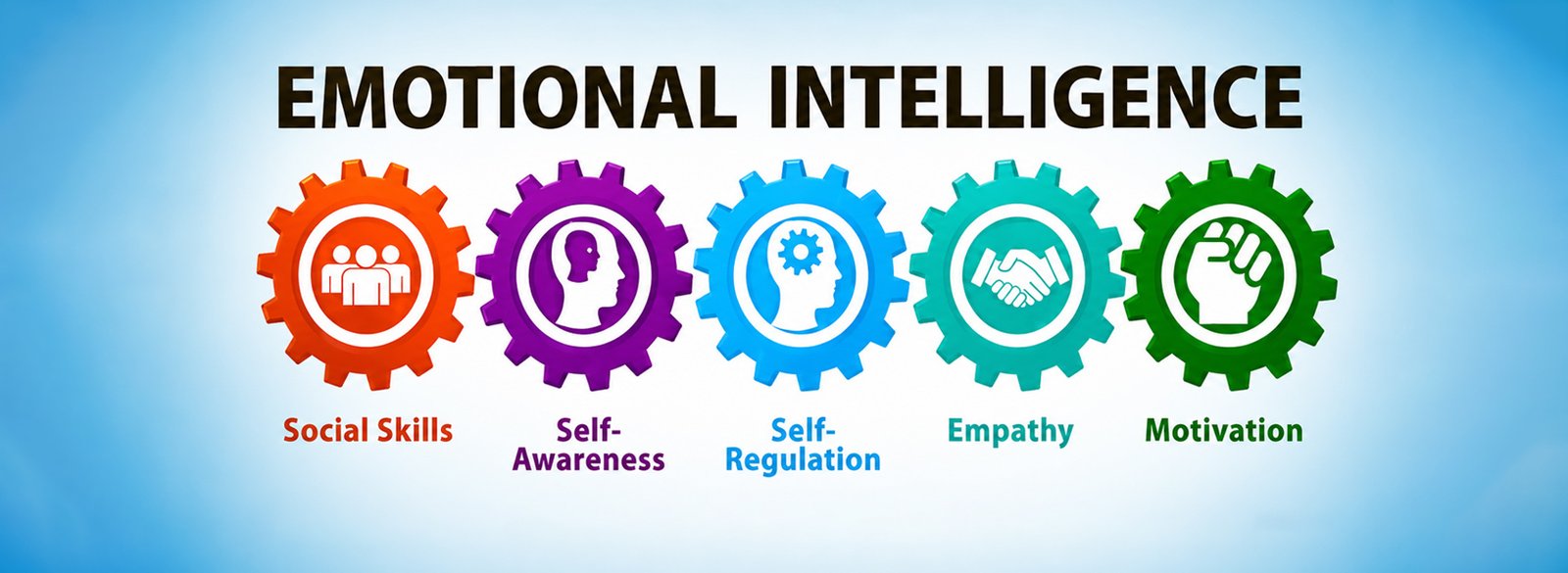
What is Emotional Intelligence? What do we mean by an Emotionally Intelligent Leader?
Today’s leaders, whether newly appointed senior leaders or middle managers, often work with the same team or new members as required by the company.
First thing first they start selling themselves as a leader, as some knowledgeable person, trying to oppose the views. But the problem is not in selling themselves as a leader, having greater knowledge, and in no time opposing the views of team members. Well, that just does not work in the real world.
The main solution lies in Conscious Listening. Conscious/Active Listening, where you actively first listen to your team with an open mind, an open heart, and empathy, half of the problem is solved over there.
By actively listening to your team with empathy and understanding, you can identify blind spots and resolve many issues effectively.
What do you mean by Emotional Intelligence in Leaders?
- Recognize and understand their own emotions.
- Understand and empathize with others’ emotions.
- Effectively manage emotions, particularly when under pressure.
- Use emotional information to guide thinking and behavior.
- Build strong interpersonal relationships.
The five Components of EI as given by Daniel Goleman are:
- Self-Awareness – What they are feeling and why? They are aware of how their emotions impact their performance and those around them.
- Self-Regulation – Leaders regulate their emotions effectively and are not impulsive. They don’t submit to moods and impulses and react impulsively. Instead, they respond. They stay calm and composed under such situations.
- Motivation – They are driven by motivation which is intrinsic, that is inside out, and thus handle setbacks efficiently.
- Empathy – Empathy is a super ability. One must truly understand other people’s emotions and where they are coming from. This helps in managing a team, resolving conflicts, and building trust, which is very important for any leader.
- Social Skills – Leaders with high EI are great communicators and relationship builders. They inspire, influence, and lead by connection.
Here are a few guidelines as to how you can get into real shifts:
Do not let your emotion take the driver’s seat. Best leaders often respond rather than react. They can quickly reset their emotions, thus taking control of the situation. If you’re quick to react, you might say something that you may regret later. These quick and powerful habits might help you develop better Emotional Intelligence.
-
Breathe before you React:
- Take a 6-second pause before reacting.
- Take a slow deep breath in. Hold for 6 seconds. Breathe out. Repeat it 3 times consciously.
- This simple act slows your heart rate and clears your mind. It gives space for you to respond and not react.
-
Label the Emotion:
- If you are feeling “Frustrated” or “Overwhelmed”, pause and identify the emotion as “Frustration” or “Anger”.
- The moment you label them, the brain gives a logic to it. Then it does not remain an emotion. Its power weakens.
- You control your mind, not the other way around. You control your emotions; they don’t control you.
-
Create a Physical Pause:
- As soon as this kind of situation emerges, do not snap back.
- Stretch, move, sip a glass of water, or stand.
- Movement disrupts emotional spirals and brings clarity.
-
Respond Later:
- Don’t just hit send. Don’t snap back. Just wait.
- Give yourself 6 seconds, which is enough time for stress chemicals to fade.
- Most regrets happen when you react too fast.
As a matter of fact, the best leaders never react; they pause, process the emotions, and respond.
These methods enhance Emotional Intelligence, improve relationships, and resolve conflicts, making you a stronger leader.
Which strategies do you want to practice this week? Drop your thoughts below.